Tuesday, July 20, 2021

Towards Bounded AC

Secret rule: You can play one of these in any Vain the Sword game you're invited to.
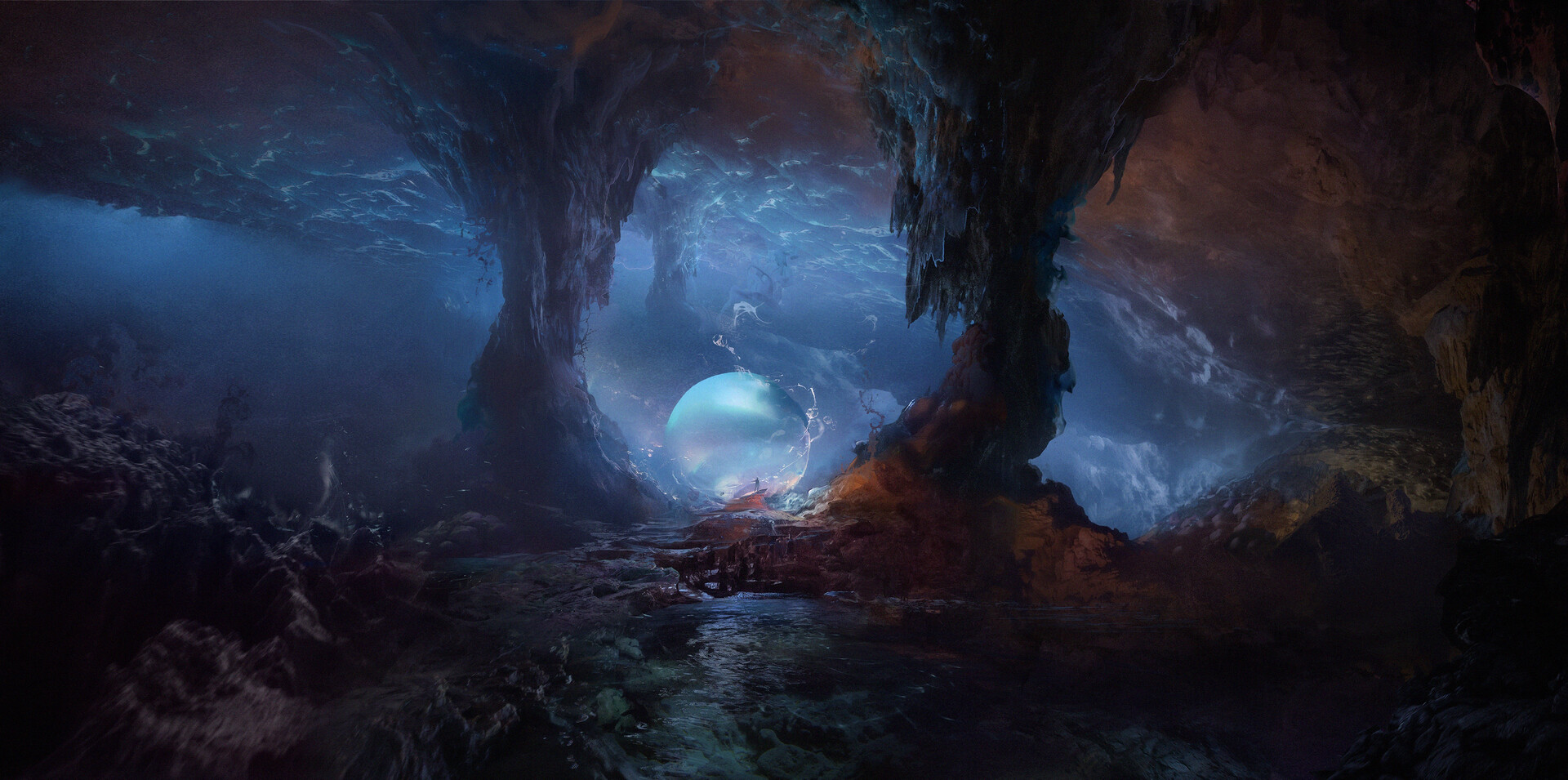
art by Daniel Romanovsky
“Every new order requires enemies, and must preserve its enemies until it has attained perfect command of its power. Those it cannot control nor antagonize it must destroy right away.” -the Elder Adversary Passage, variation 12b

Orbseeker

At every level, get +1 MD.
Starting Equipment: no orbs ;( , a bronze mirror, rough robes, and a hunting sword
  • A: Orb Quest, Spells
  • B: Domain
  • C: Imprison Horror
  • D: One With Two
Orb Quest: You cannot have more MD than you have orbs. If you're brandishing a magical item, sword or no, deal +1d6 damage when attacking with something in your other hand.

Domain: Every orb has a domain. Take 1 HP damage to commune with an orb, seeing either clear visions of the present related to the orb's domain or cryptic visions of the past related to its domain. Magical orbs have domains like "doom" or "valor," mundane orbs have domains like "the forest I came from" or "men with beards and glasses."

Imprison Horror: When you defeat a foe, you may test your LORE. If you win, you may place them inside an orb, trapping them until conditions you set are satisfied.

One With Two: While wielding two orbs, you may cast two spells per turn. If the occasion corresponds to one of the orb's domains, MD return to your pool on a roll of 1-4.

Spells: Orbseekers start with knowledge of certain spells. Roll a d10 three times to see which this one knows. If you get doubles or triples have the DM improve the spell in a way that makes it generate interesting problems. When in doubt, have the spell confer a temporary beneficial mutation.

d10 Spells Learned by Orbseekers
1. Dispel magic (negate up to [dice] magical effects for [sum] minutes) This ritual was invented by the orbseeker Kiros of Ancién.
2. Sapphire Snake Bolt (fire a beam 150 ft., bouncing up to [dice] times. Targets save or take [sum] damage.) This was the signature spell of orbseeker Mega during the Spellburners’ War.
3. Blade Atomic Blazing (empower a weapon. It casts colorful light [sum] feet, damages ghosts, and inflicts [dice] fatigue on a successful hit for [sum] minutes.) The spell is powered by a great fiery furnace deep underground, tended by the remnants of the Reservoir Project so that it does not fail from this earth.
4. Talisman of Balance (cannot be knocked prone and jump up to 30 feet for [sum] minutes.) This spell was used as bait by the Tiger Lord of Lyt to entrap the orbseekers Horem and Ispus.
5. Remote Viewing (see any space up to [sum]x10 feet away.) Orbseeker Hytham learned this spell from a colony of intelligent clams.
6. Speak with Magic (lasts [sum]x[sum] minutes.) This is a primordial spell. All herons know it, and orbseekers learned it from them.
7. Pain Sink (heal everyone present [sum]. Get [dice] fatigue.) Orbseeker Zaldo uncovered this spell while bearing the curséd orb Jseno.
8. Metal to Glass (turn nonmagical metal into glass. [dice] equipment slot’s worth.) This spell was used to shatter the Black Gates of Gog and Magog, for which the orbseeking order Cyroman was blamed. None of that ancient order now remain.
9. Craft Masterfully (forge arcane metal and a chemical catalyst into a magic weapon with up to [dice] negotiated effects.) This technique was granted by a spirit to the False Witch of Dis Mons and later taught to the orbseeker Oluwakanyinsola.
10. Vantablade (summon a light-eating one-handed khopesh into your hand. For each die invested, choose one effect: 1. Foes attacking you treat light levels as dimmer than they otherwise are. 2. You get advantage on your attacks with the vantablade. 3. deal +1d4 damage with the first wound inflicted by the vantablade each round. 4. the blade shrieks and drinks blood, causing a morale test for worldly foes when it is summoned and when it slays a significant enemy.) This is the sword of Cyril, though the summoning is of unknown origin.
Most folk do not think often of orbseekers, but there are signs of their wonders and follies throughout the world. Hepton, the great city that used to be a crater that used to be a great city. Fobos Fon Di, the lighthouse leaning farther and farther into the ocean. Ustija’s wastes, where the gilded battle garb of a generation lies untouched under the hateful vigil of a great tower. The Cloven Hill, the Shattered Gate, the Fort Solitarie— all remnants of a latter-age titanomachy. The Trench of Zaldo, where the decontrace of several fateful noble lines loiter in anticipation of destiny. The chapterhouse in the last safe place, where all the world’s impality is spoken of in a mirror.

d13 Items in the possession of Orbseekers
1. A +1 leather attila jacket, its back covered in a tapestry showing the messiah Mega’s adoption by a Principality.
2. Triptych fan of white ink on dark blue paper, showing 1: vast destruction radiating out from a sphere, 2: five figures entrapping a sphere, and 3: one figure inside a sphere, destruction radiating out from them.
3. Narcomanta, a drug banner of heavy purple fabric interlaced with white-metal links. The charge is that of a bull with its horns torn off. When mounted on a pole coming from a harness, the wearer may share the effects of any drugs, visions, potions, and delusions with those nearby. Warriors of Solitarium test their courage upon seeing this banner. On a failure they flee, on a success they are enraged.
4. Ash-black tattoo of a city’s towers, situated so the tallest of them ends at one of the orbseeker’s extremities— their throat, their palm, their heel. When ambushed or deeply disturbed, a blast of fire emerges from this extremity. This allows them to strike first against their foes, but they must save or torch those who shock them but must not be destroyed.
5. The Elder Adversary Passage, variation 3a “Saberly Saints and Angels Contend”. A book written during a bloody and tyrannous time that explains the mortal need for an enemy and the role of mortal conflict in the plans of gods. The cover is decorated with gold leaf, and has an adamant lock.
6. Peach brandy, three-score winters old now, held in an amber flask. Three sips missing— this is taken as evidence that a small amount of the orbseeker Syroul’s saliva is held within. Possibly, allegedly, turns undead as a saint’s relic.
7. Worn linen map of the continent, with several points marked, the chapterhouses of ordseeking orders now thought extinct. Each is marked with a number from 20 to 600.
8. A bargeman’s hat, the official cap of river boat authorities. From a distance, resembles the official cap of most other authorities.
9. The Elder Adversary Passage, variation 6e, “Wherefore Dark Words”. A vellum codex written during a bloody and tyrannous time that explains the mortal need for an enemy and the basis of origin of intelligence in rhetoric. This copy has strange passages underlined and numbers written in the margins.
10. The Elder Adversary Passage, variation 15a, “Someone’s always starting a jiz”. A pamphlet written during a bloody and tyrannous time that explains the mortal need for an enemy in a conversational, vulgar tone. One fold of the pamphlet has been torn out, leaving only half of the printer’s address.
11. 1d4+1 doses of Gigre of of Glistering Batons, a pink-powder drug. When on it, you can fire a laser from one eye at a time— left, right, and inner. This blinds the eye until the next sunrise. While on the drug, you cannot perceive animals and touching the dead is unclean to you.
12. The ornate hickory wheelchair of the orbseeker Syroul. Antique but of a prescient, comfortable design. Turns undead as a saint's relic.
13. GOOD WILL PLAGUE. He is a reflective, rosy estoc with a trilobite fossil in his stone hilt and a smalling fitting in the pommel to accommodate an orb. As long as an orb has been fitted into him, each missed strike against a foe gives you insight about the way they think, conferring +1 to hit, damage, and psychologize about them. This is cumulative by DM’s discretion. He is fatalistic and conservative.

The original write-up for orbseekers did not spend any time trying to explain why orbs are being sought. It took it as self-evident, and to the wise it is. An orb is a primordial shape, something fundamental and most-true to the three-dimensional world we live in. The only shape more powerful than a sphere is a hypersphere, which we cannot seek because we already live in a hypersphere, i.e. the cosmos.

The orbseekers as a group are not well-described, because they are difficult to describe fully. Lore of the orders state that the original orbquest was undertaken by a group called Kyrogalt, the Globe of Cyrus as it is rendered in the modern tongue, but the loudest orders to claim this also claim to be the original Globe of Cyrus. They served as advisors to kings and sealed away great evils. But in time petty differences formed cracks in the Globe, and when the orbseeker Cyril proposed that it was time to deploy sealed evils in service to greater ends, the first schism rent the order that was never made whole. Some say Cyrus himself is still in hiding, waiting to guide an heir in reuniting the orbseekers, but in truth his bones are on display in Saint Ustija’s Basilica. 


The intended mechanical experience of the orbseeker is one of vulnerability. You need to strive to acquire orbs and magical items if you want to have any abilities at all, and even if you luck into finding some early you’re going to have to tend them and protect them for as long as you shall live.

Ouroboros of the Orb Oracle

(The bottom and top connect.)

The location of the Cave of the Orb Oracle is commonly known among the folk of the nearby city-state, but typically only kings and heroes are fool enough to consult him on questions of the future. He offers true prophecy at no charge, but some whisper his pronouncements cause rather than warn of doom. Player characters may enter the “cave” on accident, to consult the oracle, to assassinate the oracle, or simply to loot his home of treasures. The walls are made of interlocking oddly-shapped bricks. The floors are worn lime-concrete, with long scrape marks down each hallway (from Níde). Unless otherwise stated, any given area is unlit. Any coinage is crudely re-minted into the visage of the orb oracle. Whenever time passes, roll a d6:

1. Níde the turtle, making a scraping sound as it goes. Key glued to its underside

2. 2d4 wheelers. Try to be scary because they have no real means of hurting anyone.

3. 1d4+1 orbseekers (-1 reaction) in an adventuring party. Hostile to perceived allies of the orb oracle.

4. 1d6 bottle gnomes. One will carry a candelabrum. May seek to convince passers-by to save Ainsley at point 8.

5. Blind fateman, who can make fey bargains and grant wishes. Not overtly malicious but has a harsh sense of irony

6. Pilgrim (+1 reaction) walking the dungeon path in meditation. Carries a candelabrum. Ignored by dungeon hazards.

1. Tarjani, who seeks the unity of god. Her nose in a book of comparative theology. Wears many clinking charms.

2. Aadhan, who is feeling intense personal turmoil. Wears the armor and plume of a brave carnumban, but with an empty scabbard. Sometimes leaves a trail of petals as he plucks roses nervously.

3. Pratik, who wants to reconcile the good and cruel nature of mortals. Will push up his pince nez as he readies his brace of pistols, opining it may be best to end conscious life in the world.

4. Philia, who wants to be one with her love, now departed. The depths of her sorrow drain health from those around her. Accompanied by a thigh-height grotesque.

5. Karda, who seeks to reconcile her family with her own desires. Will hire the party to assassinate her prescribed fiance, or offer a dowry of up to 150 gold coins and a silk-white mare to a particularly beautiful and available member of the party.

6. The Wolf Woman, who seeks the end of endless roads. Clear death wish, assuming deeper oblivions are not possible. Wears the swords of her enemies.

When it feels like there should be an interesting item in a spot not mentioned, roll a d6 for random loot

1. The Certain Globe

2. The Brazen Eye

3. A glob of life

4. Eye of granite

5. The Inhuman sphere

6. A Sphere of Wrecking


Points of Interest

  1. Entrance. Dozens of technicolor signs, Diagram (circle with a dot labelled “you are here”)

    1. Reading the signs: WE’RE ALL GOING TO DIE, THE EMPIRE IS DOOMED, NOTHING IS SO BAD AS ALL THAT, THE WORLD IS ENDING, IT WILL PASS, THINGS ARE TENDING BACK TOWARDS NORMAL, YOU WILL LEAVE THIS PLACE, THIS TOO WILL PASS. etc.

    2. Listening: around either corner, the same murmurs of conversation (point 2)

  2. Turtle door. Conspicuous door (circular, picture of a turtle, large keyhole). Two guards (either bottle gnomes or wheelers) More signs (like point 1).

  3. Pit. 20’ deep. Ledges (4’, worn, to each side of the pit), Shattered brass and glass at the bottom (two bottle gnomes that fell) Glittering rocks in a muddy puddle (fool’s gold)

  4. Wheelers’ den. Lit by three wall sconces. Wheelers sleeping (1d4+4) Central nest (3d4 platinum wheeler eggs worth 10 gold coins each, half-price if broken), pile of fine clothes (heaped against eastern wall)

    1. Searching the clothing pile: 55 gold coins, potion labelled with a skull (when opened, disgorge a hostile soft-boned skeleton), and an ornate knife (glass steel blade, tiger’s eye in the hilt).

  5. Illusory hallway. Optical illusion (seems to go on forever)

    1. Entering the hallway: everything is less colorful to sight. Characters loose all sense of temperature (to cover up magma heat)

    2. Proceeding down the hallway: after 70’, drops into a pit of magma.

    3. Examining nearby doors: light and laughter coming from point 6. Snoring coming from point 4.

  6. Oracle’s family. Cozy furnishings. Four of the Orb Oracle’s family members (matching sweaters, Felicitas the spouse, Kayina the adult daughter, Archem the teen son, Eklaka the mother and spokeswoman

    1. If party is friendly: family will offer a drink and a place to rest for an hour

    2. If party is hostile: Felicitas will reach for a hidden crossbow as Eklaka calls for guards who arrive in 1d4 rounds.

    3. If the room is searched: PCs find several rations (tea, raisin bread, jarred fruits), a dozen candles, a plumed helmet with rusted edges (lets you see and interact with Death) a bridle with black-silver bells (summons a faithful yet somehow evil horse), and a box with a terrified face embossed above the latch (contains a black hole)

  7. Rotary Room. Seeming semi-hemispherical shaped room (actually a sphere bisected by the floor and a central wall, 30’ radius) Door in the far wall (loop of worn rope for a handle, portal actually extends below the floor) Shattered clay lying strewn around the room (shards of urns and the like)

    1. If the door is opened, the floor rotates 180 degrees, likely dropping anyone in the room 30 feet.

  8. Big clumsy beholder. When approaching, the sound of soft weeping. Giant floating scaly orb (central eye, several eyes on tendrils, a circular bottom-mouth), comely youth chained to a pillar (Ainsley, a magic user, weeping, chains are corroded), viscera and half-digested bodies (adventurers)

    1. Freeing Ainsley: The beholder will try to stop you. If given water and time to recover, Ainsley knows flouridate water, geas blasphemous, and make feral. In disposition, evil by most standards. Ainsley will seek revenge on the Orb Oracle, who was fine with the magician’s imprisonment because he knows that they are destined to fall in love with their savior. [Here is where I acknowledge that’s pretty fucked up.]

  9. Trove. Ingots of silver (worth 300 gold), fine cloths (samite, silk, ciclatoun), fine art (large painting, clay statue of a winking pig, model of a nude model (Felicitas). Small sword stuck between some ingots (pommel with a purple stone inlaid), Ancient velum scroll (Calling Song for Comets), strange artifacts (motorcycle, eCigs, pokemon cards, jammed gatling gun, theremin, tobacco pipe that helps you do cool vape tricks)

    1. Inspecting the sword: They are named SINGLE CAUSAL CONNECTION, a light seax inky, with a knuckle-duster guard. In the hilt, a small purple stone (domain: pacifism) that contains the war-drake Ulur-Cantoom. Crackles with inky electricity. Farsighted.

    2. Inspecting the painting: portrait of one orbseeker slaying another in a wizardly duel. Titled Cyril contends with his student.

    3. Inspecting the pig statue: has a hole in one ear. Shattering the statue reveals dozens of shiny, flawless gems and precious stones.

    4. Keeping watch: a pair of reflective eyes watch from the darkness 60’ away (tiger from point 11).

    5. If the party has attacked the oracle’s family (point 6): the oracle (point 12) will be in this room with 1d4+2 bottle gnomes and attack on sight.

  10. Sitting room. Chairs, firepit, armoires, carpets, sealskin bag on a coffee table 

    1. Inspecting bag: contains a curséd ring with a quartz crystal eye. If the ring is put on, it cannot be removed until the bearer gives up everything that doesn’t belong to them. Every 1d4 days, they are attacked by a dreadful hellhound.

      1. Keeping watch: a pair of reflective eyes watch from the darkness 30’ away (tiger from point 11). Dim light from point 12.

  11. Tiger room. Tiger lounges on a pile of warm glassy orbs.

    1. Speaking to the tiger: it has human-intelligence but seldom speaks. Utterly loyal to the orb oracle.

    2. Touching an orb: the character is given a vision of some portentous event.

  12. Living quarters. Single candle (by a desk). The Orb Oracle, unsurprised to see the party. Sofa. hard candy. Small library (liberal arts, supernatural bestiaries, X-files). scroll of non-euclidean in a beautifully carved acacia scroll case.

    1. If asked for prophecy on a particular question: will quickly oblige with suspiciously specific wording.

    2. If characters have stolen from his trove: may allow them to keep certain gifts, but will insist the bulk remain with him.

    3. Otherwise: play by ear


Bestiary

Beholder (solitary)

4 DEF, 20 MOR, 14 THEWS, speaks Lizardese and Stygian.

Bite/Bite: 1d8/1d8

Eyestalks: Three of the beholder’s eyes possess a magic. Each has 8 MOR and 3 MD with which it can cast one spell each: Agony Beam, Telekinesis, and Dispel Magic. If all three stalks are severed, the beholder dies.

Clumsy: announce the beholder’s actions before other characters act in the round, then allow other characters to act before the beholder’s turn.

Monstrous Strength: has a 5-in-6 chance to perform feats of strength

Veteran: doesn’t lose morale for witnessing or perpetrating violence

Smells like stomach acid, mildew, and afterbirth

Sounds reptilian chitters. Hovers silently.

Instincts to look at beautiful things and defend its territory

Desires art objects, to prevent interlopers from freeing its prisoner


art by Ben Thompson

Bottle Gnome (1d4+1 appearing)

4 DEF, 1 MOR, 12 THEWS, speaks Antediluvian and a few words of Common

Lucerne Hammer: 1d10 damage

Sunder: weapon maneuver that dents armor. Target tests their GRACE or the armor’s value is halved.

Potion Belly: Lapping up the fluid from a shattered bottle gnome heals 3 MOR, which can be distributed among multiple drinkers. Alternatively, a DM can roll on a random potion effect table.

Smells like candles, soil, and sugar

Sounds like scintillating glass, hollow clacking. Voice high and officious.

Instincts to keep the ouroboros in order

Desires to be useful, to convince someone to save the magic user at point 8.


Fateman (solitary)

2 DEF, 8 MOR, 9 THEWS, speaks all languages

Kung Fu: 1d4+4 damage

Magician: 4 MD and the spells make invisible, glammer, read thoughts, and plane shift.

Fey Bargain: can promise almost anything, if the price is commensurate. Promises made to and by him are binding.

Smells like cornhusks

Sounds like cornfields rustling in the wind

Instincts to gather interesting objects, to avoid fighting

Desires to scare away strangers, to avoid the orb oracle’s ire


Family Member (4 appearing)

2 DEF, 6 MOR, 10 THEWS, speaks Common

Unarmed: 1d4 damage

Magician: doesn’t know any spells, but has 1 MD and can psychically duel magicians who meet their eyes

Smells like butter and cotton

Sounds like a malfunctioning bicycle. Bossy calls and high shrieks, 

Instincts to gather interesting objects, to avoid fighting

Desires to live comfortably, to encourage pilgrims walking the ouroboros


Orb Oracle (solitary)

2 DEF, 4 MOR, 7 THEWS, speaks all languages

Staff: 1d6 damage

Seer: Cannot be surprised, knows all that will happen except the event of his own death

Magician: 4 MD and the spells hatch pain, presage doom, and eyes scarlet blazing.

Smells like hard candy and mango vape juice

Sounds studious, precise and unconcerned of speech

Instincts to gather interesting objects, to avoid fighting

Desires to scare away strangers, to avoid the orb oracle’s ire


Pilgrim (solitary)

2 DEF, 6 MOR, 10 THEWS, speaks Common

Unarmed: 1d4 damage

Armored (Aadhan only): Defense is 6.

Sorrow (Philia only): Every minute spent moping, all nearby take 1 damage.

Armed (Wolf Woman only): Carries, among others, a notched bastard sword, 1d8 damage.

Smells like candlewax and dust

Sounds soft and resigned to waiting

Instincts to aid and avoid

Desires enlightenment, the end of anxiety


Tiger (solitary)

4 DEF, 10 MOR, 14 THEWS, speaks Common and Thief’s Cant

Rake/Bite: 1d6/1d8

Ambush: double damage against those not paying full attention to you.

Feline Dexterity: has a 4-in-6 chance to sneak, squeeze, or climb

Veteran: doesn’t lose morale for witnessing or perpetrating violence

Canny Familiar: three times before midnight, add a d4 to a roll. If the oracle is within grasp, you can replace a MD he rolls with the result of one of these d4 rolls.

Smells of musk

Sounds like nothing at all, or like a world-filling roar

Instincts to stay warm and lounge around

Desires to protect the orb oracle


Wheeler (2d4 appearing)

2 DEF, 4 MOR, 7 THEWS, speaks Common

Headbutt: 1d3 damage

Roll Out: move at double speed and jump 30 feet with a rolling start

Smells like grease, grime, and old leather

Sounds like a malfunctioning bicycle. Bossy calls and high shrieks, 

Instincts to gather interesting objects, to avoid fighting

Desires to scare away strangers, to avoid the orb oracle’s ire


Spellbook:

Agony Beam (inflict [sum] damage to up to [dice] targets, but if there's cover nearby they can save to dodge. Only hurts, does not damage anything.)
Eyes Scarlet Blazing (bright red smoke rolls from your eyes. For each die invested, choose one effect: 1. shoot ropey smoketrails to attack for 1d6 damage at anything within 100 feet. 2. see warm bodies through [highest] inches of material. 3. your eyes glow like spotlights, but don't spoil nightsight. 4. Those you start at must save vs. minor radiation sickness [highest]-6 days from now.)
Hatch Pain (destroy an orb to summon red-brown dust that is platonic pain. [dice] inventory slots.)
Presage Doom (Inflict an ill omen on a foe. If 1 die, a bog eye. If 2 dice, a banshee. If 3 dice, a grim. If 4 dice, a Helvid.)


Secret rule: You can play one of these in any Vain the Sword game you're invited to.
art by Daniel Romanovsky
“Every new order requires enemies, and must preserve its enemies until it has attained perfect command of its power. Those it cannot control nor antagonize it must destroy right away.” -the Elder Adversary Passage, variation 12b

Orbseeker

At every level, get +1 MD.
Starting Equipment: no orbs ;( , a bronze mirror, rough robes, and a hunting sword
  • A: Orb Quest, Spells
  • B: Domain
  • C: Imprison Horror
  • D: One With Two
Orb Quest: You cannot have more MD than you have orbs. If you're brandishing a magical item, sword or no, deal +1d6 damage when attacking with something in your other hand.

Domain: Every orb has a domain. Take 1 HP damage to commune with an orb, seeing either clear visions of the present related to the orb's domain or cryptic visions of the past related to its domain. Magical orbs have domains like "doom" or "valor," mundane orbs have domains like "the forest I came from" or "men with beards and glasses."

Imprison Horror: When you defeat a foe, you may test your LORE. If you win, you may place them inside an orb, trapping them until conditions you set are satisfied.

One With Two: While wielding two orbs, you may cast two spells per turn. If the occasion corresponds to one of the orb's domains, MD return to your pool on a roll of 1-4.

Spells: Orbseekers start with knowledge of certain spells. Roll a d10 three times to see which this one knows. If you get doubles or triples have the DM improve the spell in a way that makes it generate interesting problems. When in doubt, have the spell confer a temporary beneficial mutation.

d10 Spells Learned by Orbseekers
1. Dispel magic (negate up to [dice] magical effects for [sum] minutes) This ritual was invented by the orbseeker Kiros of Ancién.

Saturday, July 3, 2021

The Name is not the Point (magic sword generator)

 Thanks to semiurge, Vayra, Regalia, Renefor, and most fully ☆ deus ex parabola.

There is a grand epic written in blades-- the sword-song Cov Cuvaʒuth. Every sword possesses some of the song, but the strongest phrases makes stronger swords, intelligent weapons with a will to realize their three-word volition. 

Scholars try desperately to understand the thread of the epic by compiling lists of famous swords and their wielders, or by searching scriptures for convergent passages with known blades, or composing inspired passages themselves while studying martial arts. Grey monks gather swords, orbseekers scatter them, but ultimately both are in vain-- the swords shall be set in order when the end-times come, and the seer-giant Calamus returns to redeem the ocean.

The secret advantage of the THREE WORD SWORD template is that it forces you to describe an object more fully, to consider its actual physical properties. But the name is not the point-- you can and should do this with any object that's the focus of a scene. Don't let a shield stay a shield or bread be bread. 

Monday, June 21, 2021

GLoG hacklet: 4-LOM

Force-Lords Oppressing Multitudes 

WOE! It is a time of suffering in the galaxy. The loosening arm of the GALACTIC STATE has given way to pirates, petty tyrants, and the lurid infiltration of SITH. There are no heroes on any side of the many border wars, raids, and disputes among the many peoples of the ever widening fringes of space. Entire planets are enslaved by privation, or under the gaze of a sith's tower. The galaxy is not yet ripe for the CHOSEN ONE to heal its defects, but in the meantime mystics and scoundrels will do good, get rich, and die in pursuit of that which is worth pursuing in the myriad parsecs of space and its multitudinous worlds.

Character Creation

You have 8 hit points (HP) and 1 force point (FP), which you can spend to increase or decrease a d20 roll by 1d6. You regain all HP with eight hours of rest. Unless otherwise stated, the rules of the game are like your hack of choice.

  • Alien: Randomly generate one. Make some random sounds; that’s your name. You speak Basic and the single language of your race.
  • Human: You may switch two stats around. You have a real-life name or a plausible fascimile of one. You speak Basic and get +1 to rolls to see if you know a language.
  • Droid: Instead of being an organic being, you’re an intelligent. Cross out the force point section of your character sheet. Decide on a body schematic and function with your DM, moving up to 4 points around to aid this. You can weld hardware directly onto your body. You have an alphanumeric name. You speak Basic and/or Binary.

When you encounter a language you have not encountered before, you may roll a d6. On a 1, maybe modified by DM discretion, you know that language.


Pick one of the following two classes, or suggest your own:

Force User

Starting equipment: a lightsaber of a particular color, robes of a particular color, one space artifact.

+1 FP per template, automatically deflect 1 projectile per round.

  • A: You can exert telekinetic force roughly equal to the strength of a human’s push or one-handed carrying ability, and jump about thirty feet.
  • B: If you did nothing but deflect projectiles last round, you can attempt to reflect incoming attacks with an attack roll. With a minute of focus, you can sense the general direction of life within one mile.
  • C: You are followed by a student (see the tables below). Additionally, you EITHER gain strong telekinesis; allowing you to mentally exert force equal to a rocket launcher OR gain a mind trick, allowing you to make those with less HD believe something plausible with no save.
  • D: Work with the DM to invent a special force technique that you master in a night of contemplation, like the ability to shoot lightning from your fingers or come back as a ghost.

“Jedi” is a force user of any school that is sanctioned (endorsed) by the state as peacekeepers. “Sith” is a force user of any school that is sanctioned (forbidden) by the state. Normally, this is for killing peasants and raising undead fleets. Consider the teachings of your school and the symbols of their practices, and whether they are generally seen as Jedi or Sith.


Jedi are assigned padawans as student, and responsible for teaching them probity, peacekeeping, and the practices of their order. Sith take on apprentices, teaching them the mystic criminal trade and tithing any "scores" their students make for as long as the master shall live. Roll on the appropriate table below upon reaching C Template.


d12 doofy padawan table

1. Weird but chill alien

2. Incredibly zen child

3. Incredibly zen child who sometimes lapses into dark contemplations…

4. Cowardly but fun-loving stoner

5. Inner-world suburban youth covered in tattoos of sealing

6. Inquisitive sort with the naivete of one of Socrates’s interlocutors

7. Jolly fellow with a thick beard and no shoes

8. Brought her own sword

9. Former child-monarch

10. Rustic farmhand

11. Roll on edgy sith table

12. Roll twice and combine


“The fact is that a man who wants to act virtuously in every way necessarily

comes to grief among so many who are not virtuous.” -Machiavelli


d12 edgy sith apprentice table

1. John malkovish

2. Clone child with extra letter

3. Libertarian magician

4. Instead, six assassin robot

5. baron(ess), count(ess), or viscount(ess)

6. Cyborg, with additions made to be deliberately scary

7. Always uses a helmet and voice modulator

8. Spooky thirty-something who looks exactly like a demon

9. Won’t stop lighting their fists on fire

10. Shaved acolyte who just hates jedi

11. Roll on doofy padawan table

12. Roll twice and combine


But, my pupil, as my pupil you have learned the worth of scorn,
You have laughed with me at pity, we have joyed to be forlorn,
What for us are all distractions of men's fellowship and wiles;
What for us the Goddess Pleasure with her meretricious smiles!
-Sadie Williams

Scoundrel

Starting equipment: a blaster, work clothes, two space artifacts.

+2 initiative per template

  • A: Maximum damage against surprised foes. Once per episode, declare you know a particular NPC, and that they don’t want to kill you right away.
  • B: You always have at least the minimum technical skill required to steal or disable something.
  • C: Once per episode, do something totally against the odds.
  • D: Hirelings and allied fringe weirdos get +1 attack if they abandon all defense. You can use them as shields, reflecting 1d12 damage from an attack into them.

d20 space artifacts

1. Robot mechanic with an odd body schematic. Start with an understanding of binary.

2. Freighter, the space equivalent of a long-haul truck. Lots of nooks and secret spaces.

3. Fighter, the space equivalent of a sopwith camel. 50% of having a little ring that makes it hyperspace capable.

4. Laser-resistant vest. Gives DR 2 against laser blasts.

5. Flamethrower. Shoots a small cone of flame. Anyone damaged keeps taking damage until the fire is put out.

6. Jetpack. Can carry you 500 feet per round for up to ten rounds at a time, or slow your fall. Either superfast or just enough to break a fall, with no moderate speed.

7. Laser Crossbow. Throws damaged enemies back.

8. 2d4 balls of void-dynamite. Can be programmed with any sort of fuse routine. Annihilates anything within five feet, anyone within 30 feet takes 6d6 damage exploding. If cover is nearby, they can save for minimum damage.

9. Electro-fist. Also powers electronics

10. Universal power-pack. Slag fuel can be removed, having the general qualities of napalm.

11. A staggering amount of spice

12. A vantablack curtain that confers invisibility to all scanners and invisibility in shadows if you hold still. Large enough for two, if they’re cozy.

13. A lethal eCig. Save vs death, on a success you still lose ten years off your life.

14. Vibro-eskrima. Can punch through metal.

15. A handheld device that can detect midi-chlorians— microscopic creatures that attach to all forms of life, especially those strong in the force. This gives up a read-out of all life within 30 feet, and indicates how many HD of force user (or similar) any of that life may have.

16. A hand-me-down landspeeder, like a motorcycle but cooler.

17. 4 little probe droids, constantly uploading data to your handheld module

18. Rebreather, only a couple fingers big, that lets you breathe in water, fumes, or void for up to 2 hours before needing to be recharged.

19. Service of an alien. Start with their race’s one language.

20. The plans for a nearby dungeon


Combat

You either know how to use modern weapons, like blasters and vibro-knives; or elegant weapons from a more elegant time, like lightswords and blowguns. When using a weapon you don’t know how to use, get -4 to attacks with it and on a critical failure the worst imaginable outcome results.


Weapons deal 1d8 damage, and if you are unarmored and out of cover you also roll on a wound table. Lightsabers and giant cannons make you roll on the wound table anyway. At 0 or less HP, roll with a +1 on the relevant wound table. At -8 HP, you die messily.


Wound table (shot)

1. Graze. Take 1d4 fatigue.

2. Beloved charm or tchotchke absorbs the blow that would have fried your heart. Lose one significant item.

3. Arm shot. You cannot use it for 24 space-hours.

4. Gut shot. You are slowed, take -2 to most physical rolls and any further wounds are rolled at +2.

5. Blasted to within an inch of your life. Allies must get you to a healing tube, stat.

6+. Smoking hole in your head. If that was your only one, you are dead.


Wound table (cut)

1. Graze. Take 1d4 fatigue.

2. Vital part of a significant item bisected.

3. Hand cut off. Must get a new one from the local electronics store.

4. Hand cut off. Must get a new one from the local electronics store.

5. Beat to within an inch of your life. Allies must get you to a healing tube, stat.

6+. Cut in half. This kills you


Adventuring

4-LOM assumes a broad-strokes Star Wars-esk game. It occupies the spaces of intense anti-canon that early Star Wars gaming sessions must have, when no one knew what a Clone War or Darth was. It takes place in no particular era, and you should include everything from a Star Wars story that you really like, as well as everything you think is unbearably dumb. Include nothing which is boring. Notice that the allowed classes are Force User, Scoundrel, and anything the players suggest or that the DM think would be cool.


I do recommend that you let the galaxy be diverse and scruffy, enough that force users and scoundrels make natural company, and the mayor of a planet may hire them to locate the holocron-gem said to lie in the bottom of an ancient ruin.


The game loop of 4-LOM is almost identical to a typical dungeon game. The PCs seek wealth and pursue their goals by seeking dangerous, neglected places full of treasure, periodically returning to civilization to recover and spend their loot. Unless you have a specific reason to do otherwise, treat each planet with the same complexity you’d give a single six-mile hex. When the adventurers travel from the border town to the dungeon, they’re going from the fringe world to the ruin world. Feel free to expand the details on a planet more as time goes on, but don’t complicate things unnecessarily.


d12 planet types

1. globe-spanning city

2 globe-spanning forest

3. globe-spanning desert

4. globe-spanning ocean

5. globe-spanning tundra

6. globe-spanning wastes. 50% chance of atmosphere

7. globe-spanning mountains

8. globe-spanning sinkholes and tunnels

9. globe-spanning pastures

10. globe-spanning gardens

11. globe-spanning archipelago

12. Strangely, this planet has multiple biomes? Roll 1d4 times and combine.


“How vast those Orbs must be, and how inconsiderable this Earth, the Theatre upon which all our mighty Designs, all our Navigations, and all our Wars are transacted, is when compared to them. A very fit consideration, and matter of Reflection, for those Kings and Princes who sacrifice the Lives of so many People, only to flatter their Ambition in being Masters of some pitiful corner of this small Spot.” -Christiaan Huygens


Monday, June 14, 2021

Cursing Politics and Folly (GLoG class: Ranger)

Rangers are an odd thing. In their original D&D incarnation, they were potent fighters who got two hit dice at first level and only got experience if they were essentially alone on adventures. There was a lot to them, and while they seemed terribly unsuited to basically any D&D campaign where you hoped to level up they felt somehow cohesive. Ranging? How romantic. If later versions have seemed aimless I think it is in large part due to the attempt to tame this wild, weird original.

As with the druid, monk, barbarian, and the like, I want to focus on specific parts of the soup of ranger tropes, give them a coherent vector and a pathos, and inject some specificity. This class will be for the Acmori region, and represents those design goals. This ranger is an expedition captain, someone who leads parties out along the frozen seas of winter. (Alternatively, they are zoa captains, riding out on the open waves of summer. This is secondary because the Acmori campaign centralizes the winter adventuring party.)


The captain is a figure whose main tool is their crew, to which they are also bound. As a player, this creates a necessary tension. Over a captain’s career, they are well-served to cultivate relationships with particular crewmates, and eventually to negotiate better contracts. One captain might get around some obligations by gradually replacing crewmembers with crusading partisans. Another may constantly be on the lookout to make porters of the apefolk they encounter one adventure and lookouts of the eye-magi they find on the next. A captain PC is a natural adventurer, ruler, servant, questgiver, boss, and blue-collar.


Sword digression: the symbol of a captain’s office is their sword, and they also carry the previous captain’s sword. You have to carry both— make the crew carry almost anything else, but these weapons are your burden. Lose one sword and you’re jinxed. Lose both and you’re doomed. Pick one sword from the list below to be yours, and roll randomly from the same list to be the previous captain’s.


Captain

Starting Equipment: Crew of ten windfarers, thick beard or braids, fiery eyes, fur-lined crested helmet, banner with your personal device or that of your ruler, flask of gløgg, a tern or monkey, and two captain’s swords.

  • A: Writ, Excavation
  • B: Two-Weapon Fighting, Sealore
  • C: Old Salt
  • D: Aspyrian

Writ: You are bound by your duty to your crew. When you agree to go on odyssey for a patron, you are allowed to forswear payment but you must accept no less than 27 gold coins (or 32 gold coins and 4 silver, if you wish to claim your double share.) After a successful voyage you can replace any dead or retired crewmates (each has [level] HP), but if it was unsuccessful it will take a season of bottom-feeding in a port to find new hands.


Excavations: When on the ice, shipwrecked, or otherwise in the wilderness, your crew can quickly excavate a [level]-section bivouac, shack, or other hibernacle.


Two-Weapon Fighting: When fighting with your two captain’s swords, you get +1 defense and reroll 1s for damage. (Keep rerolling if you keep getting 1s.)


Sealore: When you encounter something strange on the ocean, you have a 2-in-6 chance of knowing a relevant tale about it.


Old Salt: You are never surprised in combat. Sleep does not make you any less alert. Additionally, after studying an NPC or mythic creature, get the answer to any one yes-no question about them.


Aspyrian: Through a combination of experience, lore, and intuition, you can track anyone or anything across any distance. You are led over bare stone or the ever-changing waves, seized by a conviction, a vision of your quarry that always proves accurate. When actively tracking someone, a black mark appears on their palm in warning. (This omen is caused by all sufficiently intense pursuits, not specifically by you. It's just a thing that happens, like the sunrise or spontaneous generation.)

This, but pre-Aesaetas Ruinas

d20 Captain’s Swords

1. A handsome falchion with a spiked crossguard and a manta-skin hilt.

2. A cutlass fresh-forged, kept in a bamboo scabbard bearing the ideograms “Let my Children Judge”

3. A keen falx, held in a purpose-built kney-green harness, hilted with damascene gold.

4. A gladius, the standard issue of the Summer Wars since rendered quaint. Now bears a modest carbuncle in the hilt.

5. An ornately-worked harpe, with an attendant tablet announcing its pedigree as the weapon of an ancient hero.

6. A carp’s tongue sword with a turquoise groove in the center. It weeps ancient blood in humid weather.

7. An arsenical copper jian with eight topazes inlaid in the hilt and one great topaz in the scabbard. The scabbard and hilt are bear-leather

8. A xiphos, inscribed with the ideogram “Vigor” on one side and “Votelain” on the other. One edge is serrated.

9. A rough-forged swerdan, battered, its newly-wound handle obviously standing out. Makes small black fires when held to something flammable while the ancient word “Fýr” is spoken.

10. A spatha, with one side wavy (to represent the sea) and the other side straight (to represent the land). This is used in Telumancy, where the weapon is thrown into the air and the side that points to the thrower is used to answer a question. The hilt has a discrete clip which can weight the result, always landing on the intended side.

11. A straight-bladed carnumban’s curtana, its scabbard and hilt ornate silver and gold, set with red glass gems. Whoever originally owned this was surely a beautiful fellow, possibly a temple champion.

12. A skydisk sword, with a small jade astronomical chart by the hilt. At the pommel is a small ideogram too ornate to be readable.

13. A leaf-shaped sword, engraved with a cartouche on the base of the blade, with blue velvet covering the bottom third showing an underwater scene.

14. A seax, with a brass hilt sculpted to resemble a snake belching the blade, with eyes of jasper.

15. An antenna sword, fitted into a cowhide scabbard, tattooed with a tessellating pattern.

16. A bronze rapier, a light weapon long enough to outreach most other light weapons. Held in a long sling like a strung bow.

17. A sickle sword with an intricate bifurcated hilt of coral and gold. It is made to be carried in a waistband, perhaps unwisely.

18. A grip-tongue sword, its hilt gold, its scabbard red leather tipped with gold. This scabbard-tip is actually hollow, a false bottom to carry hidden messages.

19. A khopesh with a mother-of-pearl handle and silvered hilt, inscribed with an invocation against shattering.

20. A falcata with an enameled wolf's-maw handle set with agates, the back edge of the sword filled with meticulous tallies.

Thursday, June 3, 2021

Nor Shall Evil Conquer Virtue (GLoG Class: Monk)

We have seen that I can take any tired class archetype and make it wired, be it barbarian, paladin, bard, or druid. To finish the set, we consider the Monk.

This is a class of contraries, a character who loves peace but trains for war, whose privileged position endangers the order they wish to uphold. Mechanically, they resemble the warrior of my current VtS playtests.

The white monks are soldiers and crusaders, the vanguards of armies who are trained to take orders. The black monks are embalmers and confessors, the ministers to masses who are trained to be governable. The grey monks are neither. It is their place to try to serve what is right and to fall in the attempt. Their orders teach that fighting is in vain, but necessary. The first act of tyrants and revolutionaries is to outlaw the orbseekers. The last step of their program is always to dissolve the grey monks.

To be a grey monk is to be immune to the law for as long as you can flee it.

Grey Monk
Starting Ken: Exotic weaponry, war, or ancient atrocities
Starting Equipment: humble knee-length tunic, thick socks, carrying sash, inro, wicker bascinet, arnis, and a piece of baggage.
  • A: Mercy, Acts of Agility
  • B: +1 attack per round, immune to sleeping poorly
  • C: Walk the Wending Path, Secret Signs
  • D: Insight
Mercy: You do not lose morale for witnessing or committing acts of violence. Every time you use more force than absolutely necessary, deal double damage and gain 1 Disdain, then roll a d6. 
If the result is equal to or less than your Disdain, cross out the above rules, You still do double damage with wanton violence, but your scruples slip away and your mission becomes fundamentally broken. You turn away from your training and towards a life of consumption and destruction.  You now lose morale from witnessing violence; this takes the form of abject joy and sensual distraction for you.

Acts of Agility: you have a 2-in-6 chance to perform feats, such as running along walls or slipping through impossibly small holes. Each additional monk level increases this chance by 1-in-6. 
Roll the d6 before you attempt the feat-- failure means you know you cannot succeed in this moment and you do not attempt it. You There's actually a neat saying about doing vs.trying, ask me about it sometime.

Walk the Wending Path: If it is possible to sidestep ranged attacks or snatch missiles out of the sky, you do so with ease. 

Secret Signs: When confronted with a prophecy, omen, or obvious portent, your DM is obliged to give you an extra something-something, a little hint to interpret the meaning of said prophecy, omen, or portent.You are allowed to complain when nothing portentous has happened in a while.

Insight: Spend a week meditating on the nature of mortal war, immortal theodicy, and the shape of things to come. At the end of this week, ask any one question of terrible import, like "how can I entreat the angels to deliver us?" or "how can I control the winds?" or "how can I create a weapon that will destroy Kung Fu?" The answer enters your mind like sunlight focused through a lens.
Half of every monk order's tales start with a hateful monk's insight. The other half start with a well-meaning monk's insight. Both are full of destruction and woe.

d20 Pieces of Baggage
1. disgraced mentor (hard-hearted and cruel)
2. disgraced mentor (naive)
3. mentor slain by the master of the nearest dungeon
4. parents slaughtered by the one you now love the most
5. abandoned a life of wanton disdain
6. set aside by gods for trials
7. set aside by gods for punishment
8. true love the captive of the master of a far-off dungeon
9. true love the master of a far-off dungeon
10. kaballistic curse will kill you slowly
11. you must care for an illicit bastard
12. stoppered imp-bottle. The creature within is amazingly knowledgeable and will not lie to you, but will only answer questions it thinks will serve its (evil) interests. Obviously, don't let it out of the bottle. Invent a shameful story for how this object came into your possession
13. used the forbidden Dolorous Chain Strike against an opponent in a duel. Start with +1 Disdain
14. stole a polearm from a prodigal noble. Decide on the type of polearm, as well as the shining gem worked into the shaft.
15. The unhappy acquaintance (though not guardianship) of a godparent
16. curséd shoes, the Red Path Winklepickers. When blood-soaked, they can walk on air at the cost of +1 Disdain
17. curséd collar makes you a violent animal during the night before the sabbath
18. curséd steed, the Brimstone Horse. Destined to eat its rider's remains
19. curséd flyssa saber, RED MAWS MANY. Can harm anything, and wants to
20. Roll 1d4+1 times and combine.

Will you let these old fools exile you for doing what you had to do? Art by John Park