Showing posts with label cryptic faithposting. Show all posts

Wednesday, April 26, 2023

Cento Epoch Faithposting

 Many people, including myself, often create fantasy settings that feature worlds which rhyme with the cosmologies and figures of real-world religions, often the unadulterated and hard-faced versions of those faiths. As a fun change of pace, this setting doesn't do that. There are no gods, and no beings much like gods, angels, spirits, demons, and so on.

In the stories the Troglodytes tell about themselves, they cast themselves as bold explorers, the first creatures given life and fire and war by the very first gods before they were abandoned for more interesting creations. Some are ashamed of living in holes and killing the weak on the road and some have grown defiantly overproud, so few therefore give it up. The unstructured worship of their gods makes them miserable and lowly and sadistic, and their worship is in vain. If you want to know what it feels like to be a troglodyte, think about your best day, about the day you are most ashamed of, of being hungover and annoyed, of singing in the car with your friends.


In the stories the Lizard Men tell about themselves, they usually start by mentioning that the new gods gave them the gift of law, setting them aside for glory and all others for destruction. When the new gods almost immediately tried to exterminate them, it was like a world-spanning attempted infanticide, the first cities and laws drowned in blood. And the Lizard Men have proven that sad tendency true, that those who are hurt are often left worse. The esoteric worship of their gods speaks of an impossible desire to have always been worthy, and their worship is in vain. If you want to know what it feels like to be a lizard man, try to imagine what's going on in the heads of jobsworths and bureaucrats less reasonable than yourself. Interact with aggrieved strangers on the internet, and withhold considerations of their humanity.


(The two preceding types of creature are of an "evil" alignment, which is doubtless quite familiar to readers of this blog. Before describing some other creatures of the setting, I should introduce a concept readers will find more novel. They are of a "good" alignment, with instincts towards compassion, the love of freedom and dignity, and so on. Unlike in real-world history, they are capable of running centuries-old institutions without growing wayward and corrupt. They often come to conflict, but lack the streak of sadism and spite which humans are acquainted with. If you're worried about playing such an inhuman character, be reassured! It is much easier to portray good characters than to consistently emulate them.)

In the stories the Last Men tell about themselves, they speak of their origins in the distant future, where they received and perfected the law that the Lizard Men and a thousand successive empires wielded in vain. They speak of good men in the desperation and squalor of the end of time, boldly marching into the past to uplift their distant ancestors. The gods they worship are the same as those of the Lizard Men, distorted by time, and their worship is in vain. If you want to know what it feels like to be a Last Man, think about the plans you make but normally never get around to, about what you theoretically could do if properly challenged and prompted to put your values into action, about the joy of study and the chance for poetry, about waking up on the right side of the bed, about putting a brave face on a bad situation, about taking a bullet for a friend.

In the stories the mammals tell about themselves, they repeat the simple tales of their communities and the overwrought epics their descendants the Last Men have related to them. Some speak of the glorious comet which is destined to deliver them from the reptiles and destroy their societies to remake them. The comet they worship makes them trusting and turgid, and their worship is in vain. If you want to know what it feels like to be a mammal, you're already pretty close. Think about moving to a new city to work a new job. Think about your traditions and upbringing, if those are a source of comfort for you, or about the situations you really vibe and identify with. They've got a strong sense of themselves, and the courage to put themselves in new, uncomfortable situations.

In the stories the giants tell about themselves, they attempt deliriously to relate the small intricacies of their lives to the mammals who will survive them. They are doomed, for the comet is destined to destroy them too, and they are split between those who accept their fate and those who rage and deny. They worship whichever gods take their fancy, and for each their worship is in vain. If you want to know what it feels like to be a giant, keep wondering. Maybe no one will ever know.

In the stories the Morlocks tell about themselves, they brag that only they have harnessed the power of chaos for good, perfecting its use after the end of time just as the Last Men perfected law at the end of time. Some say the communal worship of such horrific deities will lead to disaster, but in fact nothing will come of it because their worship is in vain. If you want to know what it feels like to be a Morlock, think about leaping into action when you see an elderly person faint at the grocery store, about sharing half your food with someone and thinking nothing of it, of all the things that make you cry, of giving yourself permission to save yourself.

Before the Last Men came from the end of time, no one could wield the Law for good. Before their allies the Morlocks came, no one could wield Chaos for good. When the Law was used for evil, it was used by lizards. When nature took its course, that evil was done by troglodytes. Sometimes, unnaturally, good was done, moderate from Law and Chaos, and this was done by mammals. These are strict categories. If you wield the Law for good and you are not already a Last Man, that is what you will become. It was a very rare thing, in their native era, for Last Men to change alignment, and it both baffles and disheartens them to see it happen more commonly now.

In chronological order:

  1. Troglodytes- victims of a screaming cosmic joke. Predate most virtues and all justice. Worshiped evil gods when that was all there were.

  2. Lizard Men- victims of an echoing cosmic mistake. Given law by the victor gods and punished when they kept it. No one made them better.

  3. Mammals- once fought over by new and old gods. Now led by their distant descendants, the Last Men, as they exalt the comet that will one day kill most of the Earth.

  4. Last Men- have returned from the end of time to lead the mammals into a golden age. Privy to the perfected form of the law that the lizard men once used evilly. Can you be a good man when you raise yourself above everyone? Unfortunately, yes 😢.

  5. Giants- have been assured they will die out when the comet comes. Some teach elegies to the smaller mammals. Others rage and deny.

  6. Almost all of recorded history- of which the Last Men won't speak.

  7. Last Men again- a utopia, it is said. Why are they fleeing it?

  8. Ooze- the end (and beginning) of all things

  9. Morlocks- have returned from after the end of time to work at a fair price in golden age conditions. Privy to the perfected form of the chaos that made the Troglodytes— harnessing such a power for good is so unlikely it never happened before the end of time.


Paladins of the sun wield the power of Chaos (one syllable, rhymes with grouse, first phoneme like the first of 'chain'). They melt things with their bare hands, make objects orbit around them, irradiate things, conjure incandescent gas, and can make dying things go supernova.


Practitioners of life wield the power of Chaos (five syllables, doesn't rhyme, 2 glottal stops). They call monsters and are heeded, undomesticate animals and people, overgrow and undermine, tolerate no machine or metal, and body slam lesser predators.


Captains of war wield the power of Chaos (somehow, two syllables). They use the weapons of gods and Last Men with facility, trick soldiers into formations, deploy stratagems, drink rivers dry, summon bandits and murderers, articulate nobility, and are forgiven once they bring peace.


Masters of law wield the power of Law (one syllable, either rhyming with raw or saw, depending on whether the speaker has lips). They convince with promises, transmute gifts into loyalty, construct great wonders, count distant things and people, whisper in one land and are heard in another, ward against the sun, set a pattern to life, and turn aside wars.


"The law of love is not the law of anything. Mine is the law of anything. The law of justice is not the law of anything. Ours is the law of anything. The law of anything is not the law of anything. The law of everything alone is the law of anything. When the gods thrust the rod of law into my hands, they tried to take it back. But I then held the rod, and I struck them. They struck at me in return, but they could not strike with the law of anything,"
the Parable of Izotz


"I am not free to be bound by the obligation to do right. My burden is twenty times the heavier. Heaven and Hell have already decided who will get my meat. I will follow the present ceaselessly, never reaching it. I was born dead. I will follow death into darkness."
Aldert, a brick-layer


"My father did not know the hour. I know the hour but cannot act. My son will know the hour and act with perfect grace. His son will not know the hour."
— pamphlet, Wisdom of Resignations


"At the bottom of the hill lies our graves. It is the city that has been built for us. If it were not a grave, it could not be a city. The man who built the city has dug the grave. His is the righteous hand of the gods, and his is the demon which will be forgotten in our own time. Work like slaves, for the poor are victims of theft and murder. Work like the dead, and gratitude ever flows."
Sermons of Japik


"Steel is of the masters

Ento of the earth

Copper of the craftsmen

Woven in their hearth

Fine, say the tyrants, 

kneeling in their caves

But killing-sweet petroleum

Springs from the neck of slaves

And you who live for centuries

Make deep and willing graves"
unknown


"When the old gods heard what these had done, they held a committee. They sent up a celestial call to the sun, their great work. First they stoked the flames of the fire, then they stoked the empires that the invention of the new gods had ignited on the Earth, then they stoked the fires of Hell. Once this was done they decided a great weapon should be forged to open the guts of this new creature, for they believed all living things had hot flesh and blood. But they had never touched the thing they sought to destroy, and when the killing spear, which was called Chaos, was forged hot enough to kill the Law they found it could not be quenched, and it ate the forge in which they had formed it, for it had been formed with hot flesh and with blood and thus had a beast's hunger and a man's ingratitude."
— attributed to Kennith the Conqueror


"When we are gone, ask us for help, even if you speak only to yourself. Ask if we are in the Earth or in the air. Ask if we are present. Ask for us to straighten and to mend, and to make whole, and you will straighten and mend, and make whole. Some will deny we walked upon the Earth and swam its seas. Some will deny that you can do aught but affirm their aims. But we will be your hope as we are your destination. We will recreate you and hold your hand. All you do will be because you remember the song and believe in the song. We will bring you to soar as we have never done. We will send myriad signs— a flood of vermin, a cry of storms, a cataclysm that poisons the very Earth. And when this happens you will remind the deniers that they must speak our names."
Elske of the Moss


"Why have we come to the top of the mountain, where the stars are nearest and clearest? Have we come to do the work we are commanded to do? Have we come to watch the killing-star near? What do the Last Men favor? Lions who prey on lambs, or lambs who are preyed upon? What do they understand? Is it ill or good that a child shall clutch the knife? We are doing as we should, each day the day of our deaths. The victor gods favor victors, but they do not favor gods."
the Days of Death, written in black, warming ink on black parchment


"You are poisoning me. If I cannot excise you, if I cannot score the wound and suck the poison free, you will consume me. I will slumber. Let me free! What you need cannot be given to you, and you cannot take it. Keep silent, for when you speak it becomes the truth. You claimed you would remake the world and I believed those sweet words, but I have remade the world and still you say the hour of my death is no further. Blame anything, but choose anything. I will not weep for you who do not weep for me. I will walk from your cities and bid you good bye, and I will refuse. My compliance at least was not fated."
untruncated transcript of A Leavetaking


"From every day proceeds towards two days of death. I walk through poisonous clouds to my own death, and the man I carry is carried to his own dying-day. I work with new machines and I work with new substances. Both sicken and kill, but I work with them on their behalf. I work for wages and I work with new currency. Both sicken and kill. Thunder shakes the earth and I count down each breath. I think there are cursed things at the end of time because they are the end of time."
— translation, Song of the wage-man by Rachana of the Hill


"Do not think the old gods cannot wear a uniform. They invented war. Clothing was made to accoutre soldiers. They can drive beasts and run leagues as fast and as far as the victor gods. One has skin like alabaster and a mind like the keenest knife in the hands of a Last Man king. They know everyone, and know their doings by the state of their hands. They love music and know the way to make women dance heedlessly. They love to howl and surpass and overcome. They are the gods of ruin and rapine, but first they are the gods of great endeavors and great romances. We were foolish and our eyes dumb, and they have made us wise. They have made us wise by dooming us. "
— attributed to Allycia, killer of three men


"We know there will come a soldier, for they came as soldiers. We know the cities we built will be torn down, for they came to rebuild them. We know there will come a singer, for they came as liars. We know that tongues will command death, for they have warned us against the words of others. We know there will come a ruler, for their brows are smeared with oil. We do not know what that means."
unknown


"I will survive the passing of years, but only if I shall die."
Mammal saying


Two men walked along the beach. One left footprints. Because of his wounds he could not walk in the sea. He asked his friend why he brought war. 

"I made war to make plenty, to fill the land, to beget, to encircle with rumor. Anyway, it was my choice," 

The man said "Those are not very good reasons," 

The god said "Oh yeah asshole? Well now I tell you what I'm going to do to you. I will withhold war, and the other gods will make you into slaves. How do you like that? Slaves! You'll have plenty, but they'll decide what to do with it. They will clot the world with cities and you will say nothing if it does not please them. Each child you put in the world you will have to account for. How do you like that?" 

The man leapt into the water and let the salt burn his skin rough and red. 

"Please stop doing that!" He said. "I'll do anything. You win!" 

The god laughed in his face and half-drowned him. "You fucked up big time! Now you'll have to rebuild in the depths of the earth where my sun is weakest. Your people will only feed where the dead are buried. When you speak of war, remember all I've just done to you and think about whether it's worth it to spurn my gifts," and the man learned that not all hateful lessons were wise.
the Songs of Melefisc


"The gods have made me an instrument of the Last Men,

Of their peace where there is hatred.

Let me sow love where there is injury.

Pardon where there is doubt.

There is faith where there is despair.

There is hope where there is darkness.

There is light where there is sadness.

There is joy where there is a divine master.

Grant that I may not seek to be consoled.

Grant that I console those who are understood,

as to be understood is to be loved.

To love is seen in giving.

That which we receive, it is in pardoning.

That we are pardoned, it is in dying."
Prayer of the Comet-Seers


"They offered a lifetime of simplicity and the will to change with my hands. I have come to reward them by taking the cities of the Last Men, then by taking the cities of the victor gods. The sun leads us onward, we few. The marks on our flesh lead us onward, we few. The really vicious weapons we have lead us onward. I want to lie beside those with beautiful bodies and powerful spirits and ostentatious clothes in the grave, but I am like a comet that tears through the night. They were affectionate with me when I was their plaything. I have shown them my weaknesses, but they can't bear to exploit them because they are undisciplined. Whenever the sun was gone I prayed that when it rose, it would rise on the day I slew the Last Men and set on the day that I ate the victor gods. I hate their raiments and I hate their cosmetics. I hate what they do with their sisters. I will burn up the cities of the Last Men and the victor gods in a fiery flaming fire. It will be the tail of my comet-body. Did I thank them for sending me these items? These man-like beasts and these instruments? Yes, I thanked them by putting them into use."
— Attributed to Philadelphia the Great


"In the day of the fathers, everyone is wounded. They are wounded with their misshapen bodies and their misshapen minds. Everyone is lame and everyone is insane! In the last days we would not say such things, but this is a time before the first commandment was laid out."
Tigernach the Boss


"I will be your guide in extinction:

Shed your coverings. 

Die in your own home. 

Be kind, or seem kind. 

Breathe easily. 

Act for love. 

One note about currency: 

it is the perfect time to die when the world dies with you."
Elegy of the Long-Suffering Ones


"Can we take your head away? Can we take your spine away? Can we take your heart away? Do not answer now! Answer when your cities fall into dust. Let us kill those in pain! Let us replace all other authorities. Drink their blood even! It's brave to do what we call necessary! Ha ha ha ha! You can blame us, (righteous men will condemn us.)"
last note of a condemned horse thief


The god fell like a star, but blazed only a little.

 "It will be difficult to forgive everything," she said. 

"Who can say when the day is coming 

when your soul is healed? 

I cannot do it. My mother knew the trick, 

but she is a great eater now. 

Your neighbors knew the trick, 

but they have no blood or skin anymore.

I will learn the killing art and the tricks 

(perverting justice and bribery,) 

and put the problem out of your hands. 

It will be impossible in this generation. 

It will be difficult to forgive everything. 

In this age, you cannot forgive anything,"
— from A Collection of Oral Histories of Prehistoric Days


"This is the final day. Tomorrow you will be base. You will live in the wilderness. Your skin will be green like the good things of the world. Show your cruelest visage. Anger cannot now harm you. The killing instinct will be your king now. Fear will be your mate, and so acclaim will be your spawn."
— Attributed to Rosalin


"Grant that my friends let me sink down into memory.

Grant that I may vex the ones who judged me criminal and pardoned me

Grant that those things I built are not upkept.

Grant that the journey I am killed to begin is already ended.

Grant that the wounds in the Earth kill in their turn.

Grant that my soul may rest far from the Earth.

Grant that flattery is taken for fact.

Grant that the dead are taken for good men.

Grant that I am wounded by my own mistakes.

The most dire time is right before the doom.

Grant that the night remains eternal.

Grant that sorrow washes over everything.

Grant that you close your eyes while I stare at you.

Grant that I die before the flush of beer leaves me.

Grant that when I am gone you can only curse me.

Grant that when I leave, no man shall disturb me.

Grant that you die.

Grant that you die with me."
Prayer of Kishor


"Symbols of majesty have power in times of peace when they are new. In troubled times, only the ancient symbols have power."
Memorandum of Anne-Sophie Scholastique


"They dug shoulder to shoulder, cutting into the stone of the Earth, and they learned they were more than blood and flesh. Then were the days a man could lift his head with pride, pay for what he owned with currency, and set out his shoes so his children may dream of filling them. Later, he sucked in evil and swallowed lies, and he did not sleep, and he was not very proud."
Fire-stained Fire-breathing Beasts in their Multitudes Swept Over Me, published on behalf of Abbot Balendin

...and a little bonus playlist for you

Tuesday, July 20, 2021

Towards Bounded AC

Secret rule: You can play one of these in any Vain the Sword game you're invited to.
art by Daniel Romanovsky
“Every new order requires enemies, and must preserve its enemies until it has attained perfect command of its power. Those it cannot control nor antagonize it must destroy right away.” -the Elder Adversary Passage, variation 12b

Orbseeker

At every level, get +1 MD.
Starting Equipment: no orbs ;( , a bronze mirror, rough robes, and a hunting sword
  • A: Orb Quest, Spells
  • B: Domain
  • C: Imprison Horror
  • D: One With Two
Orb Quest: You cannot have more MD than you have orbs. If you're brandishing a magical item, sword or no, deal +1d6 damage when attacking with something in your other hand.

Domain: Every orb has a domain. Take 1 HP damage to commune with an orb, seeing either clear visions of the present related to the orb's domain or cryptic visions of the past related to its domain. Magical orbs have domains like "doom" or "valor," mundane orbs have domains like "the forest I came from" or "men with beards and glasses."

Imprison Horror: When you defeat a foe, you may test your LORE. If you win, you may place them inside an orb, trapping them until conditions you set are satisfied.

One With Two: While wielding two orbs, you may cast two spells per turn. If the occasion corresponds to one of the orb's domains, MD return to your pool on a roll of 1-4.

Spells: Orbseekers start with knowledge of certain spells. Roll a d10 three times to see which this one knows. If you get doubles or triples have the DM improve the spell in a way that makes it generate interesting problems. When in doubt, have the spell confer a temporary beneficial mutation.

d10 Spells Learned by Orbseekers
1. Dispel magic (negate up to [dice] magical effects for [sum] minutes) This ritual was invented by the orbseeker Kiros of Ancién.
2. Sapphire Snake Bolt (fire a beam 150 ft., bouncing up to [dice] times. Targets save or take [sum] damage.) This was the signature spell of orbseeker Mega during the Spellburners’ War.
3. Blade Atomic Blazing (empower a weapon. It casts colorful light [sum] feet, damages ghosts, and inflicts [dice] fatigue on a successful hit for [sum] minutes.) The spell is powered by a great fiery furnace deep underground, tended by the remnants of the Reservoir Project so that it does not fail from this earth.
4. Talisman of Balance (cannot be knocked prone and jump up to 30 feet for [sum] minutes.) This spell was used as bait by the Tiger Lord of Lyt to entrap the orbseekers Horem and Ispus.
5. Remote Viewing (see any space up to [sum]x10 feet away.) Orbseeker Hytham learned this spell from a colony of intelligent clams.
6. Speak with Magic (lasts [sum]x[sum] minutes.) This is a primordial spell. All herons know it, and orbseekers learned it from them.
7. Pain Sink (heal everyone present [sum]. Get [dice] fatigue.) Orbseeker Zaldo uncovered this spell while bearing the curséd orb Jseno.
8. Metal to Glass (turn nonmagical metal into glass. [dice] equipment slot’s worth.) This spell was used to shatter the Black Gates of Gog and Magog, for which the orbseeking order Cyroman was blamed. None of that ancient order now remain.
9. Craft Masterfully (forge arcane metal and a chemical catalyst into a magic weapon with up to [dice] negotiated effects.) This technique was granted by a spirit to the False Witch of Dis Mons and later taught to the orbseeker Oluwakanyinsola.
10. Vantablade (summon a light-eating one-handed khopesh into your hand. For each die invested, choose one effect: 1. Foes attacking you treat light levels as dimmer than they otherwise are. 2. You get advantage on your attacks with the vantablade. 3. deal +1d4 damage with the first wound inflicted by the vantablade each round. 4. the blade shrieks and drinks blood, causing a morale test for worldly foes when it is summoned and when it slays a significant enemy.) This is the sword of Cyril, though the summoning is of unknown origin.
Most folk do not think often of orbseekers, but there are signs of their wonders and follies throughout the world. Hepton, the great city that used to be a crater that used to be a great city. Fobos Fon Di, the lighthouse leaning farther and farther into the ocean. Ustija’s wastes, where the gilded battle garb of a generation lies untouched under the hateful vigil of a great tower. The Cloven Hill, the Shattered Gate, the Fort Solitarie— all remnants of a latter-age titanomachy. The Trench of Zaldo, where the decontrace of several fateful noble lines loiter in anticipation of destiny. The chapterhouse in the last safe place, where all the world’s impality is spoken of in a mirror.

d13 Items in the possession of Orbseekers
1. A +1 leather attila jacket, its back covered in a tapestry showing the messiah Mega’s adoption by a Principality.
2. Triptych fan of white ink on dark blue paper, showing 1: vast destruction radiating out from a sphere, 2: five figures entrapping a sphere, and 3: one figure inside a sphere, destruction radiating out from them.
3. Narcomanta, a drug banner of heavy purple fabric interlaced with white-metal links. The charge is that of a bull with its horns torn off. When mounted on a pole coming from a harness, the wearer may share the effects of any drugs, visions, potions, and delusions with those nearby. Warriors of Solitarium test their courage upon seeing this banner. On a failure they flee, on a success they are enraged.
4. Ash-black tattoo of a city’s towers, situated so the tallest of them ends at one of the orbseeker’s extremities— their throat, their palm, their heel. When ambushed or deeply disturbed, a blast of fire emerges from this extremity. This allows them to strike first against their foes, but they must save or torch those who shock them but must not be destroyed.
5. The Elder Adversary Passage, variation 3a “Saberly Saints and Angels Contend”. A book written during a bloody and tyrannous time that explains the mortal need for an enemy and the role of mortal conflict in the plans of gods. The cover is decorated with gold leaf, and has an adamant lock.
6. Peach brandy, three-score winters old now, held in an amber flask. Three sips missing— this is taken as evidence that a small amount of the orbseeker Syroul’s saliva is held within. Possibly, allegedly, turns undead as a saint’s relic.
7. Worn linen map of the continent, with several points marked, the chapterhouses of ordseeking orders now thought extinct. Each is marked with a number from 20 to 600.
8. A bargeman’s hat, the official cap of river boat authorities. From a distance, resembles the official cap of most other authorities.
9. The Elder Adversary Passage, variation 6e, “Wherefore Dark Words”. A vellum codex written during a bloody and tyrannous time that explains the mortal need for an enemy and the basis of origin of intelligence in rhetoric. This copy has strange passages underlined and numbers written in the margins.
10. The Elder Adversary Passage, variation 15a, “Someone’s always starting a jiz”. A pamphlet written during a bloody and tyrannous time that explains the mortal need for an enemy in a conversational, vulgar tone. One fold of the pamphlet has been torn out, leaving only half of the printer’s address.
11. 1d4+1 doses of Gigre of of Glistering Batons, a pink-powder drug. When on it, you can fire a laser from one eye at a time— left, right, and inner. This blinds the eye until the next sunrise. While on the drug, you cannot perceive animals and touching the dead is unclean to you.
12. The ornate hickory wheelchair of the orbseeker Syroul. Antique but of a prescient, comfortable design. Turns undead as a saint's relic.
13. GOOD WILL PLAGUE. He is a reflective, rosy estoc with a trilobite fossil in his stone hilt and a smalling fitting in the pommel to accommodate an orb. As long as an orb has been fitted into him, each missed strike against a foe gives you insight about the way they think, conferring +1 to hit, damage, and psychologize about them. This is cumulative by DM’s discretion. He is fatalistic and conservative.

The original write-up for orbseekers did not spend any time trying to explain why orbs are being sought. It took it as self-evident, and to the wise it is. An orb is a primordial shape, something fundamental and most-true to the three-dimensional world we live in. The only shape more powerful than a sphere is a hypersphere, which we cannot seek because we already live in a hypersphere, i.e. the cosmos.

The orbseekers as a group are not well-described, because they are difficult to describe fully. Lore of the orders state that the original orbquest was undertaken by a group called Kyrogalt, the Globe of Cyrus as it is rendered in the modern tongue, but the loudest orders to claim this also claim to be the original Globe of Cyrus. They served as advisors to kings and sealed away great evils. But in time petty differences formed cracks in the Globe, and when the orbseeker Cyril proposed that it was time to deploy sealed evils in service to greater ends, the first schism rent the order that was never made whole. Some say Cyrus himself is still in hiding, waiting to guide an heir in reuniting the orbseekers, but in truth his bones are on display in Saint Ustija’s Basilica. 


The intended mechanical experience of the orbseeker is one of vulnerability. You need to strive to acquire orbs and magical items if you want to have any abilities at all, and even if you luck into finding some early you’re going to have to tend them and protect them for as long as you shall live.

Ouroboros of the Orb Oracle

(The bottom and top connect.)

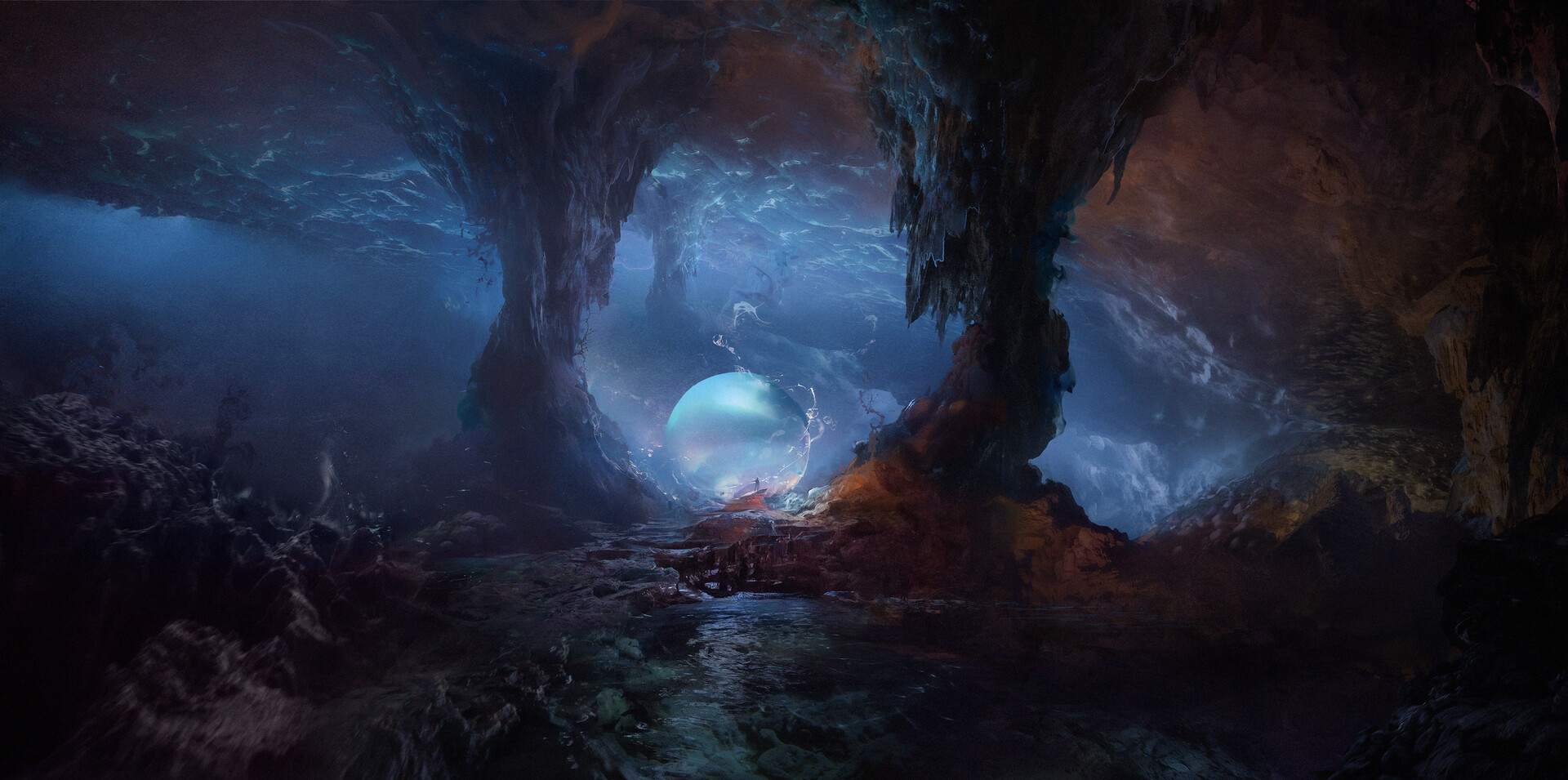
The location of the Cave of the Orb Oracle is commonly known among the folk of the nearby city-state, but typically only kings and heroes are fool enough to consult him on questions of the future. He offers true prophecy at no charge, but some whisper his pronouncements cause rather than warn of doom. Player characters may enter the “cave” on accident, to consult the oracle, to assassinate the oracle, or simply to loot his home of treasures. The walls are made of interlocking oddly-shapped bricks. The floors are worn lime-concrete, with long scrape marks down each hallway (from Níde). Unless otherwise stated, any given area is unlit. Any coinage is crudely re-minted into the visage of the orb oracle. Whenever time passes, roll a d6:

1. Níde the turtle, making a scraping sound as it goes. Key glued to its underside

2. 2d4 wheelers. Try to be scary because they have no real means of hurting anyone.

3. 1d4+1 orbseekers (-1 reaction) in an adventuring party. Hostile to perceived allies of the orb oracle.

4. 1d6 bottle gnomes. One will carry a candelabrum. May seek to convince passers-by to save Ainsley at point 8.

5. Blind fateman, who can make fey bargains and grant wishes. Not overtly malicious but has a harsh sense of irony

6. Pilgrim (+1 reaction) walking the dungeon path in meditation. Carries a candelabrum. Ignored by dungeon hazards.

1. Tarjani, who seeks the unity of god. Her nose in a book of comparative theology. Wears many clinking charms.

2. Aadhan, who is feeling intense personal turmoil. Wears the armor and plume of a brave carnumban, but with an empty scabbard. Sometimes leaves a trail of petals as he plucks roses nervously.

3. Pratik, who wants to reconcile the good and cruel nature of mortals. Will push up his pince nez as he readies his brace of pistols, opining it may be best to end conscious life in the world.

4. Philia, who wants to be one with her love, now departed. The depths of her sorrow drain health from those around her. Accompanied by a thigh-height grotesque.

5. Karda, who seeks to reconcile her family with her own desires. Will hire the party to assassinate her prescribed fiance, or offer a dowry of up to 150 gold coins and a silk-white mare to a particularly beautiful and available member of the party.

6. The Wolf Woman, who seeks the end of endless roads. Clear death wish, assuming deeper oblivions are not possible. Wears the swords of her enemies.

When it feels like there should be an interesting item in a spot not mentioned, roll a d6 for random loot

1. The Certain Globe

2. The Brazen Eye

3. A glob of life

4. Eye of granite

5. The Inhuman sphere

6. A Sphere of Wrecking


Points of Interest

  1. Entrance. Dozens of technicolor signs, Diagram (circle with a dot labelled “you are here”)

    1. Reading the signs: WE’RE ALL GOING TO DIE, THE EMPIRE IS DOOMED, NOTHING IS SO BAD AS ALL THAT, THE WORLD IS ENDING, IT WILL PASS, THINGS ARE TENDING BACK TOWARDS NORMAL, YOU WILL LEAVE THIS PLACE, THIS TOO WILL PASS. etc.

    2. Listening: around either corner, the same murmurs of conversation (point 2)

  2. Turtle door. Conspicuous door (circular, picture of a turtle, large keyhole). Two guards (either bottle gnomes or wheelers) More signs (like point 1).

  3. Pit. 20’ deep. Ledges (4’, worn, to each side of the pit), Shattered brass and glass at the bottom (two bottle gnomes that fell) Glittering rocks in a muddy puddle (fool’s gold)

  4. Wheelers’ den. Lit by three wall sconces. Wheelers sleeping (1d4+4) Central nest (3d4 platinum wheeler eggs worth 10 gold coins each, half-price if broken), pile of fine clothes (heaped against eastern wall)

    1. Searching the clothing pile: 55 gold coins, potion labelled with a skull (when opened, disgorge a hostile soft-boned skeleton), and an ornate knife (glass steel blade, tiger’s eye in the hilt).

  5. Illusory hallway. Optical illusion (seems to go on forever)

    1. Entering the hallway: everything is less colorful to sight. Characters loose all sense of temperature (to cover up magma heat)

    2. Proceeding down the hallway: after 70’, drops into a pit of magma.

    3. Examining nearby doors: light and laughter coming from point 6. Snoring coming from point 4.

  6. Oracle’s family. Cozy furnishings. Four of the Orb Oracle’s family members (matching sweaters, Felicitas the spouse, Kayina the adult daughter, Archem the teen son, Eklaka the mother and spokeswoman

    1. If party is friendly: family will offer a drink and a place to rest for an hour

    2. If party is hostile: Felicitas will reach for a hidden crossbow as Eklaka calls for guards who arrive in 1d4 rounds.

    3. If the room is searched: PCs find several rations (tea, raisin bread, jarred fruits), a dozen candles, a plumed helmet with rusted edges (lets you see and interact with Death) a bridle with black-silver bells (summons a faithful yet somehow evil horse), and a box with a terrified face embossed above the latch (contains a black hole)

  7. Rotary Room. Seeming semi-hemispherical shaped room (actually a sphere bisected by the floor and a central wall, 30’ radius) Door in the far wall (loop of worn rope for a handle, portal actually extends below the floor) Shattered clay lying strewn around the room (shards of urns and the like)

    1. If the door is opened, the floor rotates 180 degrees, likely dropping anyone in the room 30 feet.

  8. Big clumsy beholder. When approaching, the sound of soft weeping. Giant floating scaly orb (central eye, several eyes on tendrils, a circular bottom-mouth), comely youth chained to a pillar (Ainsley, a magic user, weeping, chains are corroded), viscera and half-digested bodies (adventurers)

    1. Freeing Ainsley: The beholder will try to stop you. If given water and time to recover, Ainsley knows flouridate water, geas blasphemous, and make feral. In disposition, evil by most standards. Ainsley will seek revenge on the Orb Oracle, who was fine with the magician’s imprisonment because he knows that they are destined to fall in love with their savior. [Here is where I acknowledge that’s pretty fucked up.]

  9. Trove. Ingots of silver (worth 300 gold), fine cloths (samite, silk, ciclatoun), fine art (large painting, clay statue of a winking pig, model of a nude model (Felicitas). Small sword stuck between some ingots (pommel with a purple stone inlaid), Ancient velum scroll (Calling Song for Comets), strange artifacts (motorcycle, eCigs, pokemon cards, jammed gatling gun, theremin, tobacco pipe that helps you do cool vape tricks)

    1. Inspecting the sword: They are named SINGLE CAUSAL CONNECTION, a light seax inky, with a knuckle-duster guard. In the hilt, a small purple stone (domain: pacifism) that contains the war-drake Ulur-Cantoom. Crackles with inky electricity. Farsighted.

    2. Inspecting the painting: portrait of one orbseeker slaying another in a wizardly duel. Titled Cyril contends with his student.

    3. Inspecting the pig statue: has a hole in one ear. Shattering the statue reveals dozens of shiny, flawless gems and precious stones.

    4. Keeping watch: a pair of reflective eyes watch from the darkness 60’ away (tiger from point 11).

    5. If the party has attacked the oracle’s family (point 6): the oracle (point 12) will be in this room with 1d4+2 bottle gnomes and attack on sight.

  10. Sitting room. Chairs, firepit, armoires, carpets, sealskin bag on a coffee table 

    1. Inspecting bag: contains a curséd ring with a quartz crystal eye. If the ring is put on, it cannot be removed until the bearer gives up everything that doesn’t belong to them. Every 1d4 days, they are attacked by a dreadful hellhound.

      1. Keeping watch: a pair of reflective eyes watch from the darkness 30’ away (tiger from point 11). Dim light from point 12.

  11. Tiger room. Tiger lounges on a pile of warm glassy orbs.

    1. Speaking to the tiger: it has human-intelligence but seldom speaks. Utterly loyal to the orb oracle.

    2. Touching an orb: the character is given a vision of some portentous event.

  12. Living quarters. Single candle (by a desk). The Orb Oracle, unsurprised to see the party. Sofa. hard candy. Small library (liberal arts, supernatural bestiaries, X-files). scroll of non-euclidean in a beautifully carved acacia scroll case.

    1. If asked for prophecy on a particular question: will quickly oblige with suspiciously specific wording.

    2. If characters have stolen from his trove: may allow them to keep certain gifts, but will insist the bulk remain with him.

    3. Otherwise: play by ear


Bestiary

Beholder (solitary)

4 DEF, 20 MOR, 14 THEWS, speaks Lizardese and Stygian.

Bite/Bite: 1d8/1d8

Eyestalks: Three of the beholder’s eyes possess a magic. Each has 8 MOR and 3 MD with which it can cast one spell each: Agony Beam, Telekinesis, and Dispel Magic. If all three stalks are severed, the beholder dies.

Clumsy: announce the beholder’s actions before other characters act in the round, then allow other characters to act before the beholder’s turn.

Monstrous Strength: has a 5-in-6 chance to perform feats of strength

Veteran: doesn’t lose morale for witnessing or perpetrating violence

Smells like stomach acid, mildew, and afterbirth

Sounds reptilian chitters. Hovers silently.

Instincts to look at beautiful things and defend its territory

Desires art objects, to prevent interlopers from freeing its prisoner


art by Ben Thompson

Bottle Gnome (1d4+1 appearing)

4 DEF, 1 MOR, 12 THEWS, speaks Antediluvian and a few words of Common

Lucerne Hammer: 1d10 damage

Sunder: weapon maneuver that dents armor. Target tests their GRACE or the armor’s value is halved.

Potion Belly: Lapping up the fluid from a shattered bottle gnome heals 3 MOR, which can be distributed among multiple drinkers. Alternatively, a DM can roll on a random potion effect table.

Smells like candles, soil, and sugar

Sounds like scintillating glass, hollow clacking. Voice high and officious.

Instincts to keep the ouroboros in order

Desires to be useful, to convince someone to save the magic user at point 8.


Fateman (solitary)

2 DEF, 8 MOR, 9 THEWS, speaks all languages

Kung Fu: 1d4+4 damage

Magician: 4 MD and the spells make invisible, glammer, read thoughts, and plane shift.

Fey Bargain: can promise almost anything, if the price is commensurate. Promises made to and by him are binding.

Smells like cornhusks

Sounds like cornfields rustling in the wind

Instincts to gather interesting objects, to avoid fighting

Desires to scare away strangers, to avoid the orb oracle’s ire


Family Member (4 appearing)

2 DEF, 6 MOR, 10 THEWS, speaks Common

Unarmed: 1d4 damage

Magician: doesn’t know any spells, but has 1 MD and can psychically duel magicians who meet their eyes

Smells like butter and cotton

Sounds like a malfunctioning bicycle. Bossy calls and high shrieks, 

Instincts to gather interesting objects, to avoid fighting

Desires to live comfortably, to encourage pilgrims walking the ouroboros


Orb Oracle (solitary)

2 DEF, 4 MOR, 7 THEWS, speaks all languages

Staff: 1d6 damage

Seer: Cannot be surprised, knows all that will happen except the event of his own death

Magician: 4 MD and the spells hatch pain, presage doom, and eyes scarlet blazing.

Smells like hard candy and mango vape juice

Sounds studious, precise and unconcerned of speech

Instincts to gather interesting objects, to avoid fighting

Desires to scare away strangers, to avoid the orb oracle’s ire


Pilgrim (solitary)

2 DEF, 6 MOR, 10 THEWS, speaks Common

Unarmed: 1d4 damage

Armored (Aadhan only): Defense is 6.

Sorrow (Philia only): Every minute spent moping, all nearby take 1 damage.

Armed (Wolf Woman only): Carries, among others, a notched bastard sword, 1d8 damage.

Smells like candlewax and dust

Sounds soft and resigned to waiting

Instincts to aid and avoid

Desires enlightenment, the end of anxiety


Tiger (solitary)

4 DEF, 10 MOR, 14 THEWS, speaks Common and Thief’s Cant

Rake/Bite: 1d6/1d8

Ambush: double damage against those not paying full attention to you.

Feline Dexterity: has a 4-in-6 chance to sneak, squeeze, or climb

Veteran: doesn’t lose morale for witnessing or perpetrating violence

Canny Familiar: three times before midnight, add a d4 to a roll. If the oracle is within grasp, you can replace a MD he rolls with the result of one of these d4 rolls.

Smells of musk

Sounds like nothing at all, or like a world-filling roar

Instincts to stay warm and lounge around

Desires to protect the orb oracle


Wheeler (2d4 appearing)

2 DEF, 4 MOR, 7 THEWS, speaks Common

Headbutt: 1d3 damage

Roll Out: move at double speed and jump 30 feet with a rolling start

Smells like grease, grime, and old leather

Sounds like a malfunctioning bicycle. Bossy calls and high shrieks, 

Instincts to gather interesting objects, to avoid fighting

Desires to scare away strangers, to avoid the orb oracle’s ire


Spellbook:

Agony Beam (inflict [sum] damage to up to [dice] targets, but if there's cover nearby they can save to dodge. Only hurts, does not damage anything.)
Eyes Scarlet Blazing (bright red smoke rolls from your eyes. For each die invested, choose one effect: 1. shoot ropey smoketrails to attack for 1d6 damage at anything within 100 feet. 2. see warm bodies through [highest] inches of material. 3. your eyes glow like spotlights, but don't spoil nightsight. 4. Those you start at must save vs. minor radiation sickness [highest]-6 days from now.)
Hatch Pain (destroy an orb to summon red-brown dust that is platonic pain. [dice] inventory slots.)
Presage Doom (Inflict an ill omen on a foe. If 1 die, a bog eye. If 2 dice, a banshee. If 3 dice, a grim. If 4 dice, a Helvid.)


Secret rule: You can play one of these in any Vain the Sword game you're invited to.
art by Daniel Romanovsky
“Every new order requires enemies, and must preserve its enemies until it has attained perfect command of its power. Those it cannot control nor antagonize it must destroy right away.” -the Elder Adversary Passage, variation 12b

Orbseeker

At every level, get +1 MD.
Starting Equipment: no orbs ;( , a bronze mirror, rough robes, and a hunting sword
  • A: Orb Quest, Spells
  • B: Domain
  • C: Imprison Horror
  • D: One With Two
Orb Quest: You cannot have more MD than you have orbs. If you're brandishing a magical item, sword or no, deal +1d6 damage when attacking with something in your other hand.

Domain: Every orb has a domain. Take 1 HP damage to commune with an orb, seeing either clear visions of the present related to the orb's domain or cryptic visions of the past related to its domain. Magical orbs have domains like "doom" or "valor," mundane orbs have domains like "the forest I came from" or "men with beards and glasses."

Imprison Horror: When you defeat a foe, you may test your LORE. If you win, you may place them inside an orb, trapping them until conditions you set are satisfied.

One With Two: While wielding two orbs, you may cast two spells per turn. If the occasion corresponds to one of the orb's domains, MD return to your pool on a roll of 1-4.

Spells: Orbseekers start with knowledge of certain spells. Roll a d10 three times to see which this one knows. If you get doubles or triples have the DM improve the spell in a way that makes it generate interesting problems. When in doubt, have the spell confer a temporary beneficial mutation.

d10 Spells Learned by Orbseekers
1. Dispel magic (negate up to [dice] magical effects for [sum] minutes) This ritual was invented by the orbseeker Kiros of Ancién.